
A Renewed Shawnee Hall for the Next Century
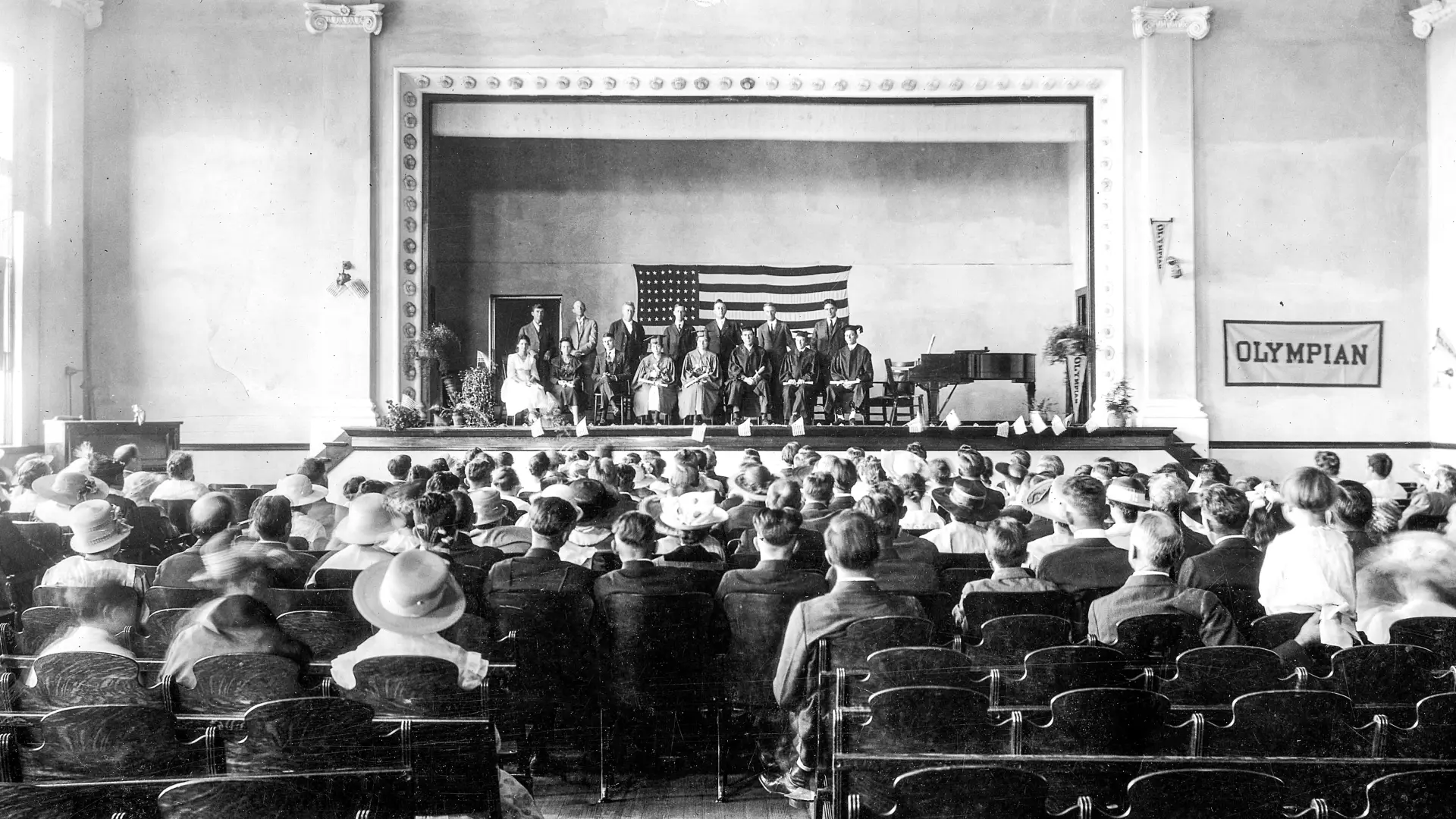
Since 1915, Shawnee Hall has been as much a part of the OBU student experience as Ka-Rip and The Walk. The first structure built on the OBU campus, Shawnee Hall has served virtually every OBU student through the years in a variety of ways. This historic building has housed students, dining facilities, a library, a theatre, a university press, academic classrooms, and faculty offices throughout the past century. The tornado left historic Shawnee Hall tattered. However, this created the opportunity to shape the future as never before. Shawnee Hall will house the School of Education, the Division of Behavioral and Social Sciences, the Master of Science in Marriage and Family Therapy and Admissions offices. Help us rebuild this prized building and usher in a new era of post-graduate education at OBU.
Launching four new graduate health science programs
OBU recently announced the upcoming launch of accelerated hybrid graduate health science programs, offering students a fast track to careers in high-demand healthcare professions. These programs, which blend virtual and on-campus learning, are designed to be accessible to students in Oklahoma and throughout the nation. The campus-based portion of the curriculum will take place in Shawnee Hall, which is currently undergoing renovations as part of the University’s Shape the Future Campaign. These renovations are essential to creating state-of-the-art learning spaces that will support the innovative health science curriculum. Once completed, the facilities will help prepare well-equipped, faith-driven healthcare professionals ready to serve their communities.
The Doctor of Occupational Therapy program will launch in January 2026, with the application opening in early 2025. The Master of Science in Speech-Language Pathology (MS-SLP) will begin in the fall of 2026, followed by the Master of Science in Physician Associate Studies program in early 2027 and the Doctor of Physical Therapy in the fall of 2027.
Pending accreditation, these programs are poised to address critical shortages in healthcare professions, meeting the evolving needs of communities across Oklahoma and beyond.
From a faculty idea
Dr. Meredith Bailey, OBU assistant professor of exercise science, sports and recreation, had no idea what she was starting but is excited about the blessing it has ignited.
“I joke that I only planned to launch a physical therapy program,” Bailey said. “But I am incredibly excited that OBU is launching each of these programs. All the programs that we have planned experience attrition rates like physical therapy. We are particularly excited about the increased access these types of programs will create in local communities and rural areas. Since students will access the programs from across the country, they likely will also complete clinical rotations in their hometowns. This learning arrangement differs from traditional programs that bring students to a central location and will ideally improve access to healthcare for residents of smaller towns and communities.”
Bailey’s story exemplifies the exciting faculty leadership in OBU’s cutting-edge Division of Exercise Science, Sports and Recreation.
Caring for God’s creation
Bailey graduated from OBU in 2011 with a Bachelor of Science in health and exercise science.
“OBU prepared me for my career as a physical therapist through hands-on learning opportunities and frequent emphasis on interpersonal interactions with community members and peers,” she said. “I never knew that half of my job as a physical therapist would be talking to people, and I appreciate that OBU created opportunities for growth in these areas.”
She credits Dr. Norris Russell and Dr. Linda McElroy for challenging and supporting her while she was at OBU.
“I also feel that professors like Dr. Dale Utt forced me to see the bigger picture and take a high-level view of the human body that really shaped my approach to biomechanics,” she said.
After OBU, Bailey attended the University of Oklahoma Health Sciences Center for her Doctor of Physical Therapy degree and graduated in 2014.
“I was challenged at OU to think about different clinical populations and how my treatment choices would influence their daily lives,” she said. “Courses were centered on how physical therapy fits into the canvas of healthcare and how holistic care can positively impact society.”
In clinical practice, she completed a residency and specialized in orthopedics. Bailey worked in private practice outpatient clinics and continues to do so as needed.
“For many years, I worked for a large group of outpatient clinics and then eventually became a partner in the group with my husband, and we opened the branch that we run in Shawnee,” she said. “It has been amazing to serve the community that raised me.”
Looking back, she sees that her undergraduate work at OBU assisted this type of approach because the same philosophy was present.
“As God’s people, we are bound to care for His creation, and each class at OBU was framed in that theology,” Bailey said. “Exercise seems simple, but caring for the human body through movement requires specific and personalized methods. I received training in exercise prescription and behavioral modification that enhanced my ability to reach patients once I was in the clinic.”
Back to Bison Hill
“Coming back to OBU has been an incredible blessing, and I am grateful for the opportunity to influence the education of students,” she said. “I have always been impressed by how OBU’s faculty walks alongside students and guides the learning process. I was intimidated to return as a faculty member to Bison Hill. I grew up watching my father be an advocate and mentor for music students as a professor, and I have been surrounded by some of the best academic minds who shaped my outlook on society and my career.”
Bailey said she is still intimidated and impressed by her colleagues. But she knows God can do far more than we can ask or imagine. She can see how her training at OBU and beyond has provided her with the tools to manage what is ahead.
“I tell prospective students that it’s great that they want to pursue physical therapy or another career, but OBU gives you more than technical training,” she said. “I was challenged to read literature and process meaning. I was expected to speak clearly and with conviction, and most importantly, I was given a spiritual context for my work.”
During the OBU Fall 2024 Convocation, Bailey received the Promising Teacher Award. This award is presented to a junior faculty member who has taught at OBU for less than six years, has demonstrated outstanding potential as a teacher and has the characteristics of one who may be a future recipient of the Distinguished Teaching Award.
Watching a dream develop
“The Doctor of Physical Therapy program was a dream started by my predecessors and a rumbling in the Shawnee physical therapy community for years,” Bailey said. “The feasibility of such a program felt insurmountable and far-fetched, but the idea kept coming back to me when I returned to campus.”
Bailey and colleague Dr. Jeff Hogan, assistant professor of exercise science, sports and recreation, had worked together in clinical practice before teaching at OBU.
“One day, Dr. Larinee Dennis (co-provost and dean of business, science, health and education) told us to dream big,” Bailey said. “We tossed it around, sifted through data, and determined that a unique approach was needed to get this off the ground. I completed my orthopedic residency through a group that partners with universities in academic ventures in the graduate healthcare space. I reached out to the group and asked if they would meet with us to discuss options, and they explained how hybrid programs operate and what that could mean for OBU.”
From there, Hogan and Bailey took the idea to Dr. Chad Payn, chair of the Division of Exercise Science, Sports and Recreation, and then to Dennis.
“And from there, it took flight,” Bailey said. “I can only believe that God wanted that door to be kicked open with the amount of support we felt from OBU and the community. It is a non-traditional approach to learning, but today’s students want the most efficient and effective education.”
The need for PHYSICAL THERAPY
Bailey said there are approximately 20 percent more physical therapist jobs available than there are qualified people to fill them.
“I can tell you, personally, that hiring physical therapists is difficult right now because there are so many job openings,” she said. “New physical therapy graduates will have their pick of jobs once they are ready.”
As an accelerated hybrid program, OBU’s Doctor of Physical Therapy program provides multiple benefits for students.
“This means that students will have OBU’s trademark high academic standards in their education and enter the workforce more quickly than their peers,” she said. “This means that students will incur less debt and start benefiting future patients and their careers sooner than other graduate students.”
The Doctor of Physical Therapy degree is the expected level of education in the field and is mandated for accreditation and licensure.
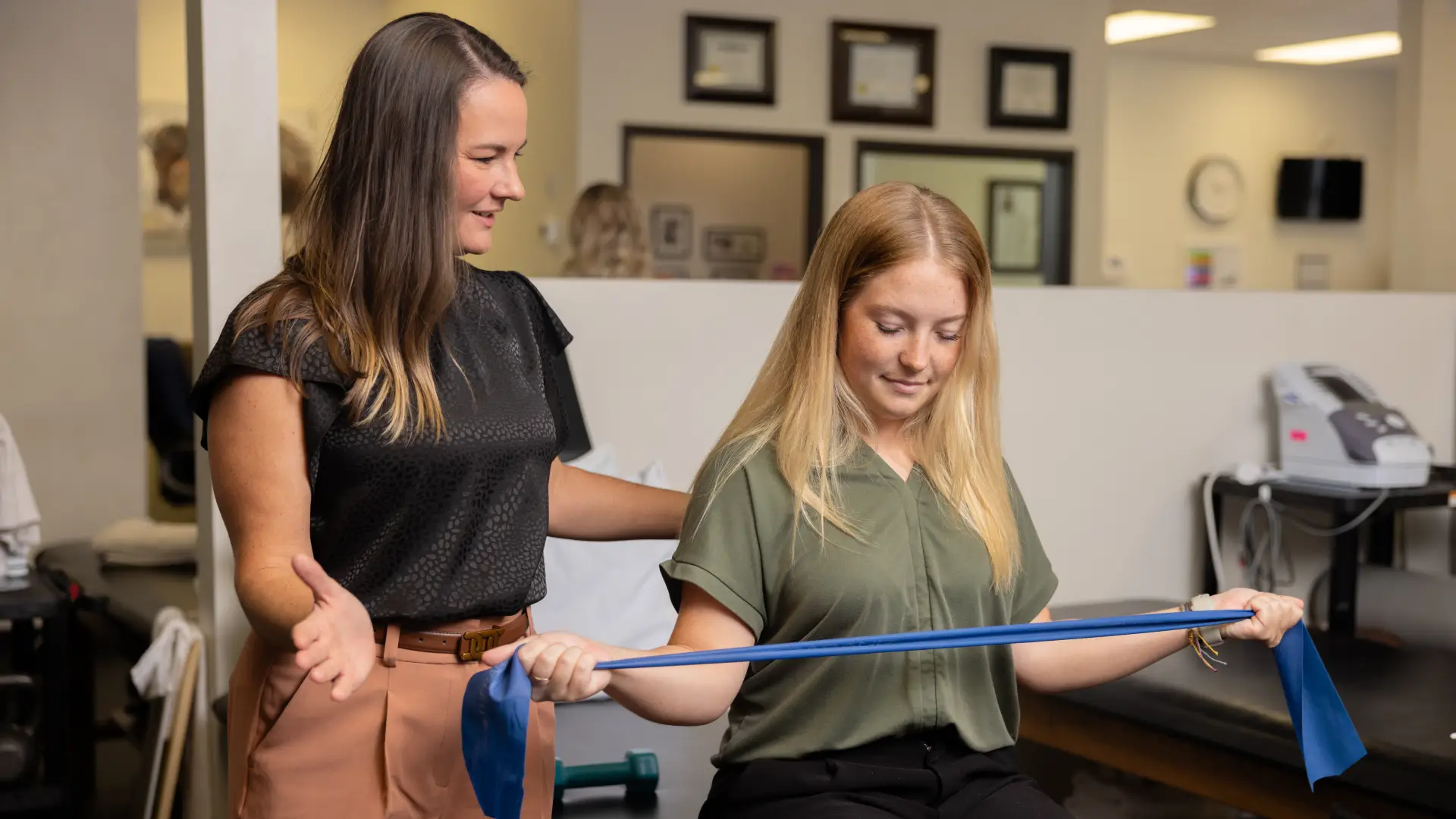
“OBU’s program will be grounded in holistic care, and being part of the set of graduate healthcare programs increases opportunities for interprofessional collaboration and learning for our students,” Bailey explained. “Though our students will be across the nation, using their time on campus and in interactive online classes, professors can promote holistic patient care and teamwork by integrating various professional interactions.”
Students will periodically visit campus to participate in hands-on laboratory experiences designed to complement and enhance their ongoing coursework.
OBU expects to maintain a 12:1 student-to-faculty ratio and will bring in experts in content areas, like neurology and pediatrics, to assist with these experiences.
“Students will also complete multiple clinical rotations in their locations of choice – at least to an extent,” she said. “OBU has access to a host of clinical placements across the country, and the goal is to allow students to be placed where it is convenient and appropriate for their learning experience. They will be expected to have rotations in various settings to experience a variety of patient cases, but this could range from orthopedics, skilled nursing, pediatrics, neurorehabilitation, sports rehabilitation, to a host of others.”
The critical role of Shawnee Hall
“The lab space in Shawnee Hall is essential to each of the programs,” Bailey said. “We expect our programs to have large cohorts of 60 to 100 students. When these students come to campus, we need a space large enough to accommodate that many students and their treatment tables.”
For example, in physical therapy labs, there are often two students at a treatment table and with 100 students, that requires 50 tables and 100 rolling stools.
“The renovations to Shawnee Hall are necessary to provide space for these experiences,” she said. “The equipment will also be stored in the building, so specific solutions have been designed for this purpose. The lab space will not look like a science lab you may see in Wood Science Building, but it will primarily be open space with endless options. We need it to be fluid so that each program can tailor it to their students’ needs when they are on campus. “
The hybrid nature of the programs also means that students will only see each other in person a few times per year. Creating an inviting, open learning space promotes engagement and camaraderie within the cohort. This setup also allows faculty to engage with the entire group at once, avoiding the need to schedule multiple small sessions in separate rooms.
The rooms are also designed with the latest technology, allowing faculty to demonstrate specific interventions to the entire group. For example, a faculty member can use a camera to stream a demonstration, such as spinal manipulation, from one treatment table to monitors in the room, ensuring every student can easily follow along. Without this advanced technology, faculty would face limitations, and lab sessions would be less efficient.
“The lab experiences will help make the program successful,” she said. “Students learn so much through hands-on, immersive experiences and teamwork with their peers and faculty. OBU must create a space that supports the students and faculty and makes them excited to return to campus each semester.”
Bailey said she is most excited about the ability to host a large number of students for lab activities. This space has been designed to adapt to the needs of various programs, ensuring it will benefit the university well for years to come. When not used by the graduate programs, it can be utilized for multiple other purposes.
“It is filling a void in the current academic space on campus,” she said.
God will do immeasurably more
“The damage to Shawnee Hall felt like a blow to the collective psyche of OBU’s community,” Bailey said. “Much like an athlete sees a season-ending injury, we saw the lights go out for this historic structure. The dreams were stopped mid-step and the future unknown, but rehabilitation, like our students will deliver as future clinicians, is possible.”
She said it mimics the identity crisis seen in athletes who have traumatic injuries.
“Athletes identify strongly as individuals capable of highly physical endeavors, and Shawnee Hall was one of our OBU identifiers,” she said. “Who were we without this building and the memories inside? Everyone knows Shawnee Hall – alumni grieved its loss. It is a bit dramatic of comparison, perhaps, but it hurt the hearts of OBU to see it broken.”
She firmly believes that the renewal efforts, along with the launch of these programs, are the beginnings of God doing immeasurably more at OBU.
“The campaign is part of this historic movement, and with perseverance and faith, Shawnee Hall will again be a foundational structure on Bison Hill.” o